


To go from one date to another, use your keyboard. On mobile, please swipe right or left.
In Pollutec's 40 years, sustainable development has become a major issue. An economic and societal issue, it has gradually been institutionalized, at the cost of collective awareness following - often - climatic and industrial disasters. We offer you a look back at some of Pollutec's key dates and development
January 8, 1971
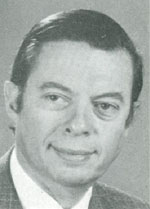
The "Ministry of the Impossible" is how Pierre Poujade called the Ministry of the Environment. Appointed in 1971 by Prime Minister Jacques Chaban-Delmas, Robert Poujade became Minister Delegate to the Prime Minister, in charge of protecting nature and the environment. The 100 environmental actions defined by George Pompidou guide his action. For three years, until 1974, Poujade pioneered. He has hardly any budget: "An interesting Ministry, which should not cost the State anything", warned him Giscard d'Estaing when he was appointed. As for Pompidou, who initiated the position, he warned him "You won't have much money. You will have little direct influence on things. You will only know the results of your action very late. »
May 5, 1972
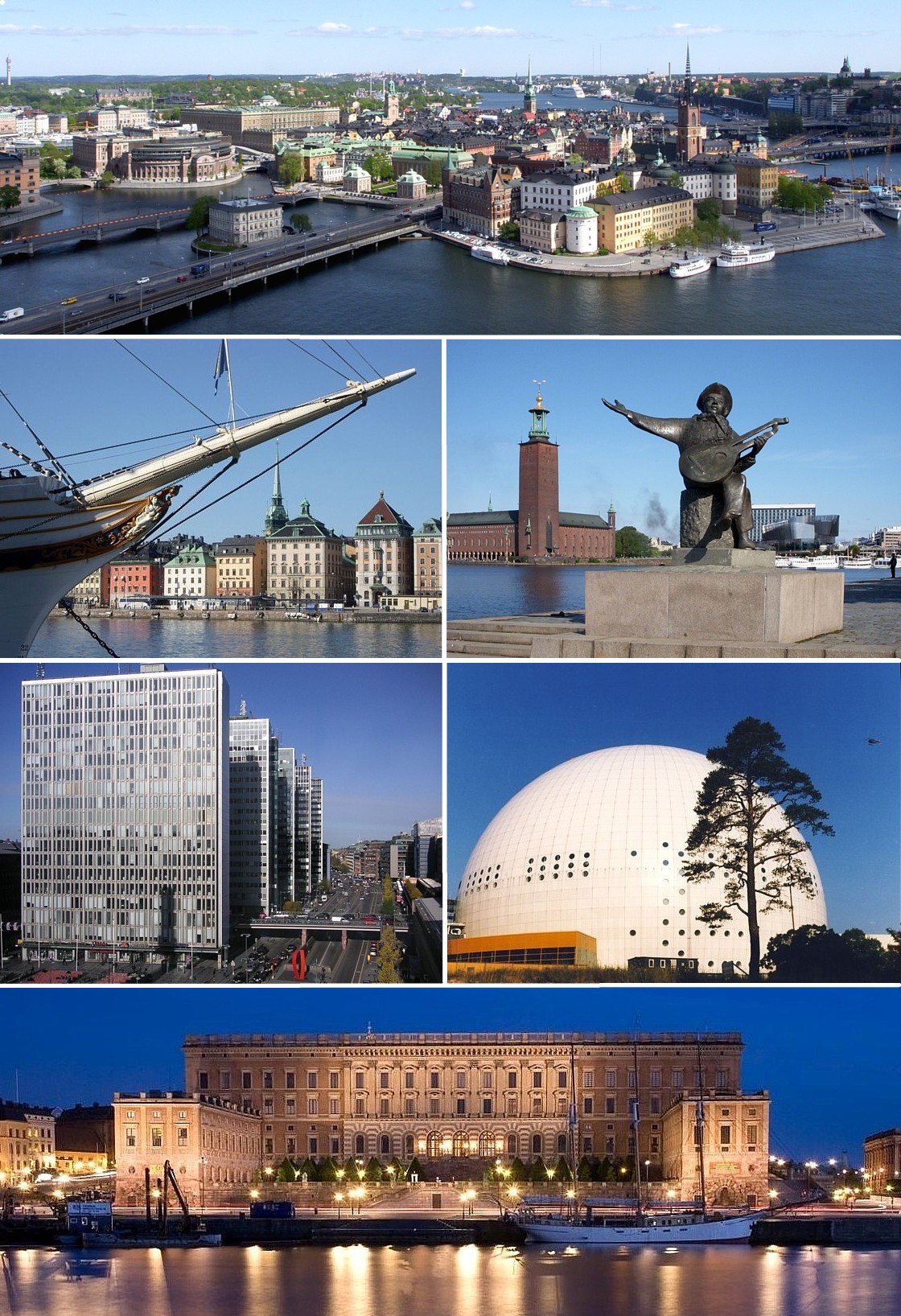
"The first Earth Summit is held in Stockolm under the United Nations umbrella. The work is based in particular on the founding report ""Nous n'avons qu'une planète Terre"" by Barbara Ward and René Dubos. The conference resulted in the adoption of a 26 principles declaration aimed at preserving the environment. This is the beginning of the United Nations Environment Programme. States also commit to meet every ten years to review the state of the planet. "
1978
The brand was born in Paris as a result of a double dynamic: the growth of an exhibition on water techniques, and the emergence of other issues related to the environment. The four historical themes of the exhibition -issues related to air, waste and noise, and the water issue- are already the pillars of the brand.
November 18th, 1986
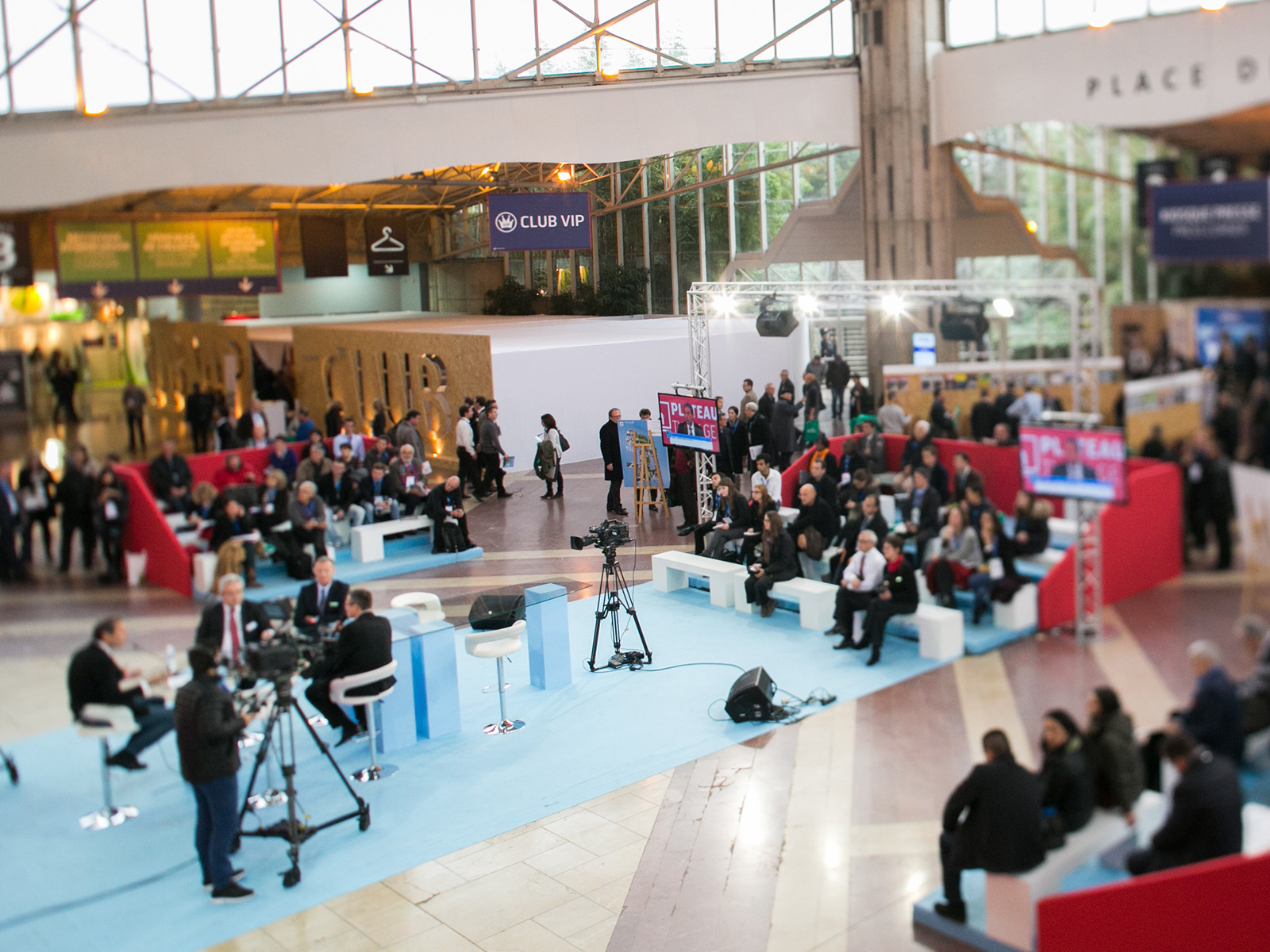
The exhibition settles in Lyon and grows exponentially. Today, it benefits from a particularly rich and abundant regional ecosystem. In rotation, every odd year from 1993 to 2013, Pollutec Paris focuses on punctual and new environmental issues.
March 20, 1987
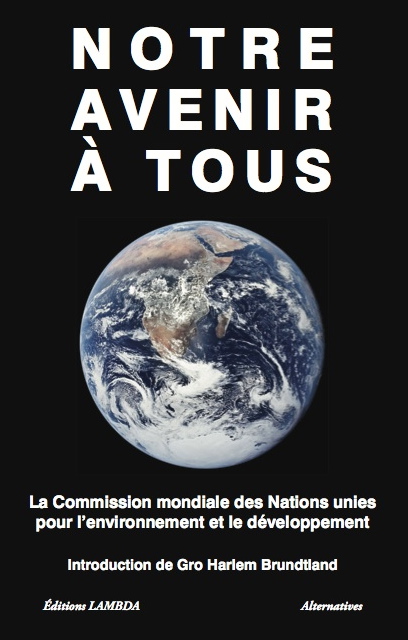
Written by the World Commission on Environment and Development, the Brundtland report, also entitled "Our Common Future", serves as the basis for the 1992 Earth Summit. It marks the birth of the term "sustainable development" and defines it as follows: "a mode of development that meets the needs of the present without compromising the ability of future generations to meet their own needs"

November 9, 1988
The IPCC, the Intergovernmental Panel on Climate Change, was created at the request of the G7. The objective is to create a climate study group, which could not be suspected of bias or pursuing an agenda. The work of the group then serves as a support to the United Nations. In short, it is a question of "regularly establishing a collective scientific expertise on climate change. »
December 19, 1990
The creation of the Environment and Energy Management Agency is the result of the merger of several state agencies created under the leadership of Pierre Poujade, AQMA, AFME and ANRED. Early on, the agency and Pollutec forged privileged relationships. Pollutec's energy base was built in partnership with Ademe. Today, the agency has a budget of more than 650 million euros.
June 3, 1992
More than 100 countries are attending the summit. It led to the signing of the "Rio Conventions": the Convention on Biological Diversity, the United Nations Framework Convention on Climate Change, and the Convention to Combat Desertification. 2500 Measures have also been adopted, but most of them have never been adopted. This summit was decisive in the adoption of the Kyoto Protocol.
10 décembre 1993
Pollutec Paris takes place every odd year. The exhibition focuses on specific and new environmental issues, including service approaches, specific thematic approaches, flagship operations and villages. The last edition took place in 2013. Since then, Pollutec has also developed in Africa with Pollutec Morocco.

February 2, 1995
The Barnier Act, named after Michel Barnier, then Minister of the Environment, established the general principles of environmental law. It allows the creation of two major principles: the National Commission for Public Debate, responsible for organizing public participation in decisions relating to major development or equipment projects with a significant impact on spatial planning and the environment, and the creation of "plans for the prevention of foreseeable natural risks".
December 11, 1997
This is the first landmark agreement to combat global warming. After several months of negotiations, countries commit to reduce greenhouse gas emissions by 5% between 2008 and 2012. The agreement became effective in November 2005, despite the non-ratification by the United States.
December 12, 1999
On December 12, the oil tanker Erika, built in 1975 and chartered by Total, broke in two off the Breton coast. At the time, it was carrying more than 30,000 tonnes of heavy fuel oil. 400 km of coastline would be polluted, and the damage was estimated at more than 200 million euros. In France, this shipwreck, followed by the Prestige, led to awareness and the implementation of measures to improve safety at sea and avoid marine pollution.
June 3, 2003
The Raffarin government, meeting in an interministerial committee, adopted this strategy to comply with the commitments made at the Johanesburg Earth Summit in 2002 and to integrate the European Strategy for Sustainable Development adopted in 2001 in Goteborg. Six strategic axes have been identified and ten action programmes have been established.
August 10, 2003
During the first half of August, France, and most European countries, particularly in the South, experienced a heat wave unprecedented since the 1950s. Temperature records are being broken all over France. Some cities experience several days at temperatures above 40°C. In France, the episode caused 15,000 deaths. The people over 75 are the most affected. In the aftermath, the government announced a heat wave plan.
June 21, 2004
For the first time, France develops a plan that links public health and environmental aspects. It brings together 45 actions classified into 8 axes. Its objective is "to achieve a quality of the environment that does not endanger or negatively influence human health". Evaluation reviews are planned to prepare a new version of the plan planned for 2009.
May 24, 2006
David Guggenheim's documentary, based on a presentation by Al Gore, former Vice President of Bill Clinton, is a historic success for a film of this genre. He is awarded two Oscars, and the Nobel Peace Prize shared with the IPCC, the Intergovernmental Panel on Climate Change.
December 30, 2006
Promulgated on 30 December, the law transposes the 2000 European Water Directive into French law. It brings two major changes: the recognition of the right to water for all and the need to take into account adaptation to climate change in the management of water resources.

August 3, 2009
Nicolas Sarkozy's campaign promise, the Grenelle de l'environnement brings together several actors in sustainable development. The objective is to make long-term decisions to limit greenhouse gas emissions, improve energy efficiency and safeguard biodiversity. But the negotiations are tough. The Hulot Foundation at the origin of the project slams the door before the end. The law inspired by the discussions was adopted almost unanimously in the Assembly despite strong criticism from some ecological associations. A Grenelle II meeting is being held in 2010 to clarify the application procedures of the Grenelle I law. The vote is much less unanimous.
13 juillet 2010
As part of the Grenelle de l'environnement commitment, the Institut Français du Pétrôle is changing its name and adding "New Energies". This change marks the transition of the group's activities following a plan followed between 2006 and 2010. It aimed to move from a hydrocarbon-focused activity to a research strategy for the energy transition. More than 50% of the institute's R&D budget is focused on NETs, new environmental technologies.
December 12, 2015
In Paris, after several months of long negotiations, which were extended by one day, the countries reached an agreement. It commits them to limiting global warming to 1.5 to 2°C by 2100, without anything making this agreement truly mandatory. 196 of the 197 UN member countries have signed the agreement.
November 27, 2018
In Lyon, the show celebrates its 40th anniversary and its 28th edition. 73,000 professionals, more than 2,000 exhibitors from 128 countries are expected.


In Pollutec's 40 years, sustainable development has become a major issue. An economic and societal issue, it has gradually been institutionalized, at the cost of collective awareness following - often - climatic and industrial disasters. We offer you a look back at some of Pollutec's key dates and development.
Go to Pollutec's site
